Auteur/autrice : spices_admin

  • Le clou de girofle de Madagascar : bienfaits et usages culinaires

    Le clou de girofle de Madagascar : bienfaits et usages culinaires

    Introduction

    Après la vanille, le clou de girofle est l’une des épices phares de Madagascar, dont le terroir volcanique et le climat tropical offrent des conditions idéales à sa culture.

    Un profil aromatique puissant

    Le clou de girofle malgache se distingue par son intensité aromatique : notes boisées, chaudes, légèrement piquantes, portées par une forte teneur en eugénol, le composé responsable de son parfum caractéristique.

    Bienfaits reconnus

    Le clou de girofle est traditionnellement utilisé pour ses propriétés antiseptiques et antalgiques, notamment en usage local pour apaiser les douleurs dentaires. Il est également riche en antioxydants et utilisé en digestif après les repas dans de nombreuses cultures.

    Usages culinaires

    • En cuisine salée : pot-au-feu, marinades, currys, riz parfumé.
    • En pâtisserie : pain d’épices, compotes de fruits, vin chaud.
    • En infusion : associé à la cannelle et au gingembre pour une tisane digestive.

    Comment bien le conserver

    Conservez les clous de girofle entiers plutôt que moulus : ils gardent leurs arômes bien plus longtemps. Un contenant hermétique, à l’abri de la lumière et de l’humidité, permet une conservation de 2 à 3 ans sans perte notable de puissance aromatique.

    Conclusion

    Simple à utiliser et incroyablement polyvalent, le clou de girofle de Madagascar mérite une place de choix dans toute cuisine qui aime les épices franches et authentiques.

  • Grades de vanille expliqués : A, B, Gourmet — comment s’y retrouver

    Grades de vanille expliqués : A, B, Gourmet — comment s’y retrouver

    Introduction

    Sur le marché de la vanille, les termes « Grade A », « Grade B » ou « Gourmet » reviennent constamment, mais leur signification reste souvent floue pour les non-initiés. Voici ce qu’ils recouvrent réellement.

    Le Grade A (Gourmet, Prime)

    Il désigne des gousses charnues, souples, brillantes, avec un taux d’humidité optimal (autour de 30 à 35 %) et un taux de vanilline élevé. Ce sont les gousses destinées à être utilisées entières, fendues et grattées : pâtisserie fine, infusions, présentation. Leur apparence compte autant que leur arôme.

    Le Grade B (extraction)

    Moins charnues, parfois plus sèches ou fendillées, les gousses de Grade B n’en sont pas moins aromatiques : leur taux de vanilline peut même être comparable à celui du Grade A. Elles sont surtout destinées à la fabrication d’extraits, où l’apparence importe peu puisque la gousse est infusée puis retirée.

    Les critères techniques qui définissent un grade

    • Longueur de la gousse
    • Taux d’humidité
    • Teneur en vanilline
    • Souplesse et intégrité physique
    • Poids moyen par gousse
    • Intensité du parfum

    Quel grade choisir selon votre usage ?

    Pour une utilisation où la gousse reste visible ou entière (crème brûlée, infusion, décoration), privilégiez le Grade A. Pour un usage exclusivement en extraction (extrait maison, arôme, rhum arrangé), le Grade B offre un excellent rapport qualité-prix.

    Conclusion

    Le grade n’est pas un gage de qualité aromatique absolue, mais un indicateur de la destination d’usage de la gousse. Bien choisi, il permet d’optimiser à la fois le résultat en cuisine et le budget.

  • Extrait de vanille maison : la recette complète

    Extrait de vanille maison : la recette complète

    Introduction

    Fabriquer son propre extrait de vanille est l’une des façons les plus économiques et les plus gratifiantes de profiter pleinement d’une belle gousse. Contrairement à l’arôme artificiel, l’extrait maison conserve la richesse aromatique complète de la vanille naturelle.

    Les ingrédients nécessaires

    • 4 à 5 gousses de vanille (Bourbon noire ou vanille cuts pour un bon rapport qualité-prix)
    • 200 ml d’alcool neutre à 40° minimum (vodka ou rhum blanc)
    • Un flacon en verre hermétique, opaque de préférence

    La méthode étape par étape

    1. Fendez les gousses de vanille sur toute leur longueur sans les séparer complètement.
    2. Placez-les dans le flacon et recouvrez-les entièrement d’alcool.
    3. Fermez hermétiquement et rangez à l’abri de la lumière, à température ambiante.
    4. Secouez le flacon une fois par semaine.
    5. Patientez au minimum 2 mois, idéalement 4 à 6 mois pour un extrait plus profond.

    Astuces de pro

    Plus l’extrait vieillit, plus il gagne en rondeur et en complexité. Vous pouvez continuer à ajouter de l’alcool au fur et à mesure que vous prélevez de l’extrait, à condition de laisser toujours les gousses immergées. Un extrait bien préparé se conserve indéfiniment.

    Utilisations

    L’extrait maison remplace à parts égales l’extrait du commerce dans toutes vos préparations : pâtisseries, crèmes, boissons chaudes, cocktails.

    Conclusion

    Avec quelques gousses de qualité et un peu de patience, un extrait de vanille maison surpasse largement la plupart des versions industrielles, pour une fraction du prix à long terme.

  • Vanille Bourbon vs Tahitienne vs Pompona : le comparatif complet

    Vanille Bourbon vs Tahitienne vs Pompona : le comparatif complet

    Introduction

    Toutes les vanilles ne se ressemblent pas. Derrière le mot « vanille », trois espèces botaniques bien distinctes se cachent : la Bourbon, la Tahitienne et la Pompona. Chacune possède un profil aromatique, une texture et des usages culinaires propres. Voici de quoi s’y retrouver avant votre prochain achat.

    La vanille Bourbon : la référence pâtissière

    Issue de Vanilla planifolia, cultivée à Madagascar, aux Comores et à La Réunion, la vanille Bourbon est la plus répandue dans le monde. Son profil aromatique est intense, gourmand, avec des notes de cacao, de caramel et de fruits secs. C’est la vanille de référence pour les crèmes, les pâtes à gâteau, les ganaches et la biscuiterie : polyvalente, elle s’accorde avec presque tout.

    La vanille Tahitienne : florale et anisée

    Botaniquement différente (Vanilla tahitensis), la vanille type Tahitienne développe un profil beaucoup plus floral, avec des touches anisées, de fleur et parfois de fruits rouges. Sa gousse est plus fine et plus souple. Elle est particulièrement recherchée en haute pâtisserie et en parfumerie, où sa complexité aromatique fait merveille dans des préparations légères : crèmes anglaises fines, sorbets, infusions délicates.

    La vanille Pompona : boisée et puissante

    Moins connue du grand public, la vanille Pompona (Vanilla pompona) séduit par ses arômes boisés, fumés, presque épicés. Sa gousse est charnue mais moins riche en vanilline que la Bourbon. Elle trouve naturellement sa place dans les rhums arrangés, les infusions et les préparations où l’on recherche une profondeur aromatique plus rustique.

    Comment choisir ?

    • Pour une pâtisserie classique et polyvalente : Bourbon.
    • Pour une création raffinée à dominante florale : Tahitienne.
    • Pour un rhum arrangé ou une infusion corsée : Pompona.

    Conclusion

    Le choix de la vanille est avant tout une question de profil aromatique recherché. My Spices Land propose ces trois familles en direct import de Madagascar, avec une traçabilité complète du terroir jusqu’à votre cuisine.

  • The Spices of Madagascar: A Complete Guide to an Exceptional Terroir

    The Spices of Madagascar: A Complete Guide to an Exceptional Terroir

    Madagascar, island of spices

    Set in the Indian Ocean like a miniature continent, Madagascar concentrates an exceptional biodiversity that makes it one of the richest spice-growing lands in the world. The island is the world’s first or second largest producer of several major spices, including vanilla, cloves and Voatsiperifery pepper.

    This is no accident: Madagascar’s volcanic soil, watered by regular tropical rain and warmed by generous sunshine, creates ideal conditions for the development of essential oils and aromatic compounds. At My Spices Land, we source our Madagascar spices directly from local producers.

    Cloves: treasure of the fragrant island

    Madagascar is one of the world’s largest producers of cloves. This spice, actually the dried flower bud of the clove tree (Syzygium aromaticum), contains up to 20% eugenol, a powerful aromatic compound with recognised antiseptic properties.

    Malagasy cloves stand out for their high essential oil content and intense notes of warm wood, resin and camphor. They are essential in French cooking (bouquet garni, pot-au-feu, mulled wine) as well as in many cuisines around the world.

    Our whole Madagascar cloves are available in 250 g, 500 g and 1 kg bags for professionals.

    Madagascar cinnamon

    Not to be confused with Ceylon cinnamon (Cinnamomum verum), the cinnamon grown in Madagascar mostly belongs to the species Cinnamomum zeylanicum, cultivated in the island’s humid coastal regions.

    Malagasy ground cinnamon offers warm, faintly sharp, highly aromatic notes. Its reddish-brown colour signals a good cinnamaldehyde content, its main active compound. It’s ideal for desserts (apple tart, rice pudding, gingerbread), hot drinks and red meat marinades.

    Discover our Madagascar ground cinnamon.

    Madagascar turmeric

    Turmeric (Curcuma longa) is grown in the Malagasy highlands, at altitudes that favour an exceptional concentration of curcumin, its main active ingredient. Malagasy turmeric has an intense orange-yellow colour and an earthy, faintly peppery and bitter aromatic profile.

    Used for millennia in Ayurvedic medicine, turmeric is today at the centre of much scientific research into its anti-inflammatory properties. We offer it in two formats:

    Moringa: Madagascar’s miracle plant

    Moringa (Moringa oleifera) is nicknamed the « tree of life » in Africa. Its leaves contain an extraordinary concentration of nutrients: vitamins A, B, C and E, calcium, potassium, protein and antioxidants. Gram for gram, moringa leaves contain 7 times more vitamin C than oranges and 4 times more calcium than milk.

    Our Madagascar moringa powder is dried at low temperature to preserve all its nutrients. Its faintly herbaceous, earthy taste blends easily into smoothies, bowls and sauces.

    Nutmeg and mace

    Madagascar produces a significant share of the world’s nutmeg. Malagasy nutmeg is recognisable by its powerful, warm, faintly sweet aroma. Our whole nutmeg is sold whole so you can grate it as needed — freshly grated nutmeg has an aroma incomparable to store-bought powder.

    We also offer ground nutmeg for convenience.

    Pink peppercorns: the fake pepper chefs love

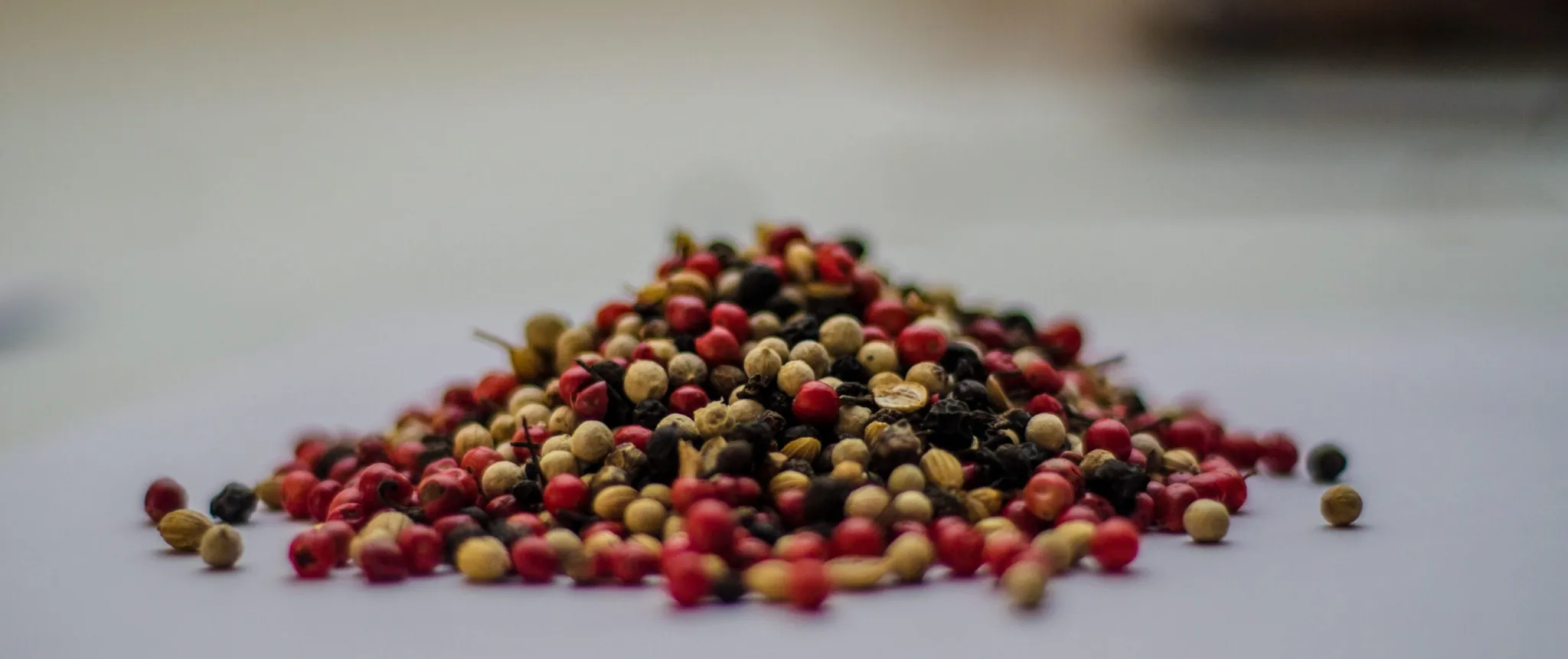
    Despite its name, the pink peppercorn is not a true pepper. It’s the dried fruit of the Brazilian pepper tree (Schinus terebinthifolius), a South American tree naturalised in Réunion and Madagascar. Its bright red berries offer fresh, resinous, faintly peppery notes, without the heat of true pepper.

    Chefs use it a lot for decoration (its berries stay whole when cooked) and to bring a fresh note to cream-based sauces, fish marinades and chocolate desserts. Our Madagascar pink peppercorns are hand-sorted for a flawless presentation.

    The peppers of Madagascar

    Beyond wild Voatsiperifery, Madagascar also produces:

    • White pepper: black peppercorns with the pulp removed by soaking. A milder, less complex taste, ideal for white sauces.
    • Ground black pepper: the everyday essential, of a quality well above supermarket pepper thanks to its grinding freshness.

    FAQ — Spices of Madagascar

    Are Madagascar spices organic?

    Many small Malagasy producers grow their spices using traditional practices with no chemical inputs, de facto close to organic. At My Spices Land, we select our suppliers based on sustainable farming practices and responsible cultivation.

    How should Malagasy spices be dosed in cooking?

    The general rule: less than you think, and adjust to taste. Quality fresh spices are more concentrated than mass-market ones. For a dish serving 4: 1/2 teaspoon of cinnamon or turmeric, 2-3 whole cloves, a pinch of grated nutmeg.

    Can Madagascar spices be mixed together?

    Absolutely. Malagasy spices pair remarkably well with one another. Try a blend of cinnamon + cloves + nutmeg for outstanding mulled wine, or turmeric + black pepper (pepper improves curcumin’s bioavailability) for a golden milk.

  • Using Vanilla in Baking: Chef Tips and Techniques

    Using Vanilla in Baking: Chef Tips and Techniques

    Why vanilla quality changes everything in baking

    Vanilla is one of the most universally loved flavours, but also one of the most easily ruined by a mediocre product. A pastry made with a genuine Grade A Madagascar vanilla pod and the same recipe made with synthetic vanillin powder are two fundamentally different tasting experiences.

    Natural vanilla contains over 250 aromatic compounds that interact with one another. Synthetic vanillin contains just one. That molecular richness is the source of the roundness, depth and lingering finish attributed to a good vanilla-flavoured pastry.

    Forms of vanilla and their uses

    The whole pod: the master of aroma

    The whole pod is the noblest and most expressive form. It lends itself to two main uses:

    • Infusion: split the pod in two, scrape out the seeds, and infuse everything in a hot liquid (milk, cream, water) over low heat for 15 to 30 minutes. Ideal for custard, crème brûlée, panna cotta, ice cream.
    • Scraping the seeds: collect the vanilla caviar to mix directly into a batter (financier, madeleine, cake), a buttercream or a tart filling. The tiny black flecks look wonderfully elegant in a white preparation.

    Our Grade A pods, 13-15 cm, are the ideal choice for this use: plump enough to scrape easily, at an excellent value.

    Vanilla powder: practical and versatile

    Grade A vanilla powder is obtained by drying and grinding whole pods. It contains all the pod’s matter — seeds AND husk — for a full aromatic profile.

    It’s used anywhere you’d mix in a powder: shortcrust, sablé and choux pastry, sponge cakes, pastry cream. Dosage: use 1 teaspoon of powder to replace one whole pod.

    Its major advantage over the pod: no preparation, no infusing, zero waste. And it keeps longer (12 months versus 18-24 months for the pod).

    Vanilla caviar: professional precision

    Vanilla caviar is the pod’s inner pulp, extracted and concentrated. It’s the part with the highest aromatic density, along with the famous little black flecks so prized visually.

    A niche product used by pastry chefs, caviar is measured out by the spatula or the tip of a knife. A small amount goes a long way. It keeps refrigerated for up to 6 months and freezes perfectly.

    Aroma extraction techniques

    Cold infusion

    Increasingly used by chefs, cold infusion preserves vanilla’s most delicate aromas, which heat can partly degrade. Method: submerge a split pod in 500 ml of full-fat liquid cream, let infuse for 24 hours in the fridge. The result has exceptional aromatic finesse, ideal for vanilla whipped cream or panna cotta.

    Infusing in fats

    Vanillin is fat-soluble: it dissolves preferentially into fats. Infusing vanilla in butter or neutral oil extracts a large share of its aromas. Homemade vanilla butter — made by melting unsalted butter with a split pod at 60°C for 20 minutes — turns any financier or galette into a masterpiece.

    Homemade vanilla sugar

    The simplest and most effective way to extend the life of your pods. Place empty pods (after scraping) in an airtight jar of 500 g of caster sugar. In 2 weeks, the sugar is fragrant. In 2 months, it’s exceptional. This sugar can replace ordinary sugar in all your recipes.

    Vanilla pairings with other flavours

    Vanilla is one of the most « sociable » flavours in baking — it lifts almost everything without imposing itself:

    • Vanilla + dark chocolate: an unbeatable classic. Vanilla rounds out cocoa’s bitterness. Use Grade Premium for an outstanding fondant or ganache.
    • Vanilla + citrus: vanilla and lemon, vanilla and orange — vanilla’s sweet notes balance citrus acidity. Perfect for tarts and entremets.
    • Vanilla + red fruit: vanilla-raspberry panna cotta is a great classic that perfectly illustrates this harmony.
    • Vanilla + coffee: in a tiramisu or an affogato, vanilla softens coffee’s bitterness and creates remarkable complexity.
    • Vanilla + Voatsiperifery pepper: a bold but sublime pairing for chocolate creations or caramel sauces.

    FAQ — Vanilla in baking

    Can a vanilla pod be replaced with vanilla extract?

    Yes, but not in every preparation. Liquid, alcohol-based extract works well for sponge cakes, biscuits and cooked custards. It’s less suited to cold preparations (whipped cream, mousse) where alcohol can throw off the texture. Dosage: 1 teaspoon of pure extract = 1 pod.

    Why isn’t my vanilla flavouring my preparations?

    Three common causes: 1) The pod is too dry (poor storage or mediocre quality). 2) The infusion wasn’t long enough. 3) The preparation was too hot when the vanilla was added (volatile aromas evaporate). Always add vanilla at temperatures below 80°C.

    How much pod for a recipe serving 4?

    As a rule of thumb: 1 Grade A pod per 500 ml of liquid or 500 g of batter. With Grade Premium 20 cm+, half a pod is often enough thanks to its exceptional aromatic richness. It’s better to start with less and adjust — you can’t remove aroma from an over-vanilla’d preparation.

    Discover our full range of Madagascar vanilla to elevate your baking.

  • How to Store Vanilla Pods for the Long Term

    How to Store Vanilla Pods for the Long Term

    Why proper vanilla storage matters

    A vanilla pod is a living product. Even after curing, it keeps evolving: its aromatic compounds keep developing and transforming. Good storage keeps that evolution heading in the right direction — and avoids the two main enemies, dehydration and mould.

    Properly stored Grade A vanilla pods keep their suppleness, shine and aromatic intensity for 18 to 24 months. Poorly stored, they can turn dry and bland within weeks.

    Ideal storage conditions

    Temperature

    The ideal range is between 15°C and 20°C. At this temperature, the enzymatic reactions that develop aroma continue slowly without degrading the pod. Absolutely avoid:

    • The refrigerator — too cold and too humid, it encourages mould growth and crystallises aromas.
    • Cupboards near the oven or hob — excessive heat (>25°C) speeds up oxidation and dries out the pods.

    Humidity

    The ideal humidity level is between 60% and 70%. An atmosphere that’s too dry dehydrates the pod; one that’s too humid causes mould. This is the hardest balance to maintain — hence the importance of the container.

    Light

    Always keep your pods away from direct light. UV rays degrade aromatic compounds, particularly vanillin. A dark cupboard or an opaque container is enough.

    Which container to choose?

    The airtight tube: the best option

    This is the method we recommend and the one we use to package our own pods. A food-safe plastic or glass tube with an airtight seal keeps stable humidity around the pod. Advantage: the pod stays straight, unbent, which prevents cracking.

    The airtight glass jar

    A glass jar with a rubber seal (Le Parfait-style) is an excellent alternative for larger quantities (250 g, 500 g). Wrap the pods in baking parchment before placing them in the jar to avoid direct contact with the glass.

    Cling film: the stopgap solution

    If you don’t have an airtight container, wrap each pod individually in cling film, then place them in a zip-lock bag, pressing out as much air as possible. This works for 2-3 weeks.

    What to avoid

    • Non-airtight plastic bags
    • Metal containers (risk of oxidation)
    • Direct contact with other strongly scented spices

    What if your pods have hardened?

    A slightly dried-out pod can be revived. Here are two techniques:

    Steam rehydration

    Pass the pod quickly over a bowl of hot water (without dipping it in). Wrap it immediately in cling film and leave it to rest for 24 hours. The pod will regain some of its suppleness.

    Using it as an infusion

    A pod too dry to scrape is still perfect for infusing in hot milk, cream or oil. Cut it into pieces and let it infuse over very low heat for 20 minutes. The remaining aromas will release into the liquid.

    What to do with empty pods after scraping?

    Never throw away a pod after scraping it! It still holds 30 to 40% of its aroma:

    • Homemade vanilla sugar: place empty pods in a jar of caster sugar. In 2-3 weeks, you’ll have vanilla sugar far better than store-bought.
    • Homemade vanilla extract: submerge empty pods in vodka or rum (1:3 by weight). After 2 months macerating in the dark, you’ll get a professional-quality natural vanilla extract.
    • Vanilla salt: blend dried empty pods with fleur de sel. Excellent with desserts and white meats.
    • Vanilla powder: dry the empty pods in the oven at 50°C for 2 hours, then grind them into a fine powder. Use it like our Grade A vanilla powder.

    FAQ — Storing vanilla

    Can vanilla pods be frozen?

    Technically yes, but it’s not recommended. Freezing alters the pod’s cellular structure and, on thawing, some aroma is lost with the released water. Room-temperature storage is by far superior.

    How do you know if a vanilla pod is still good?

    A still-usable pod: supple, glossy or slightly frosted, fragrant as soon as the container is opened. A pod to discard: brittle like wood, odourless, or showing grey mould (different from the white vanillin crystals, which are actually a good sign).

    How long do vanilla-derived products keep?

    Vanilla powder keeps for 12 months in an airtight jar away from light. Vanilla caviar keeps for 6 months refrigerated. Pure vanilla seeds keep for 8 to 10 months in an airtight jar.

  • Voatsiperifery Pepper: Madagascar’s Wild Pepper

    Voatsiperifery Pepper: Madagascar’s Wild Pepper

    What is Voatsiperifery pepper?

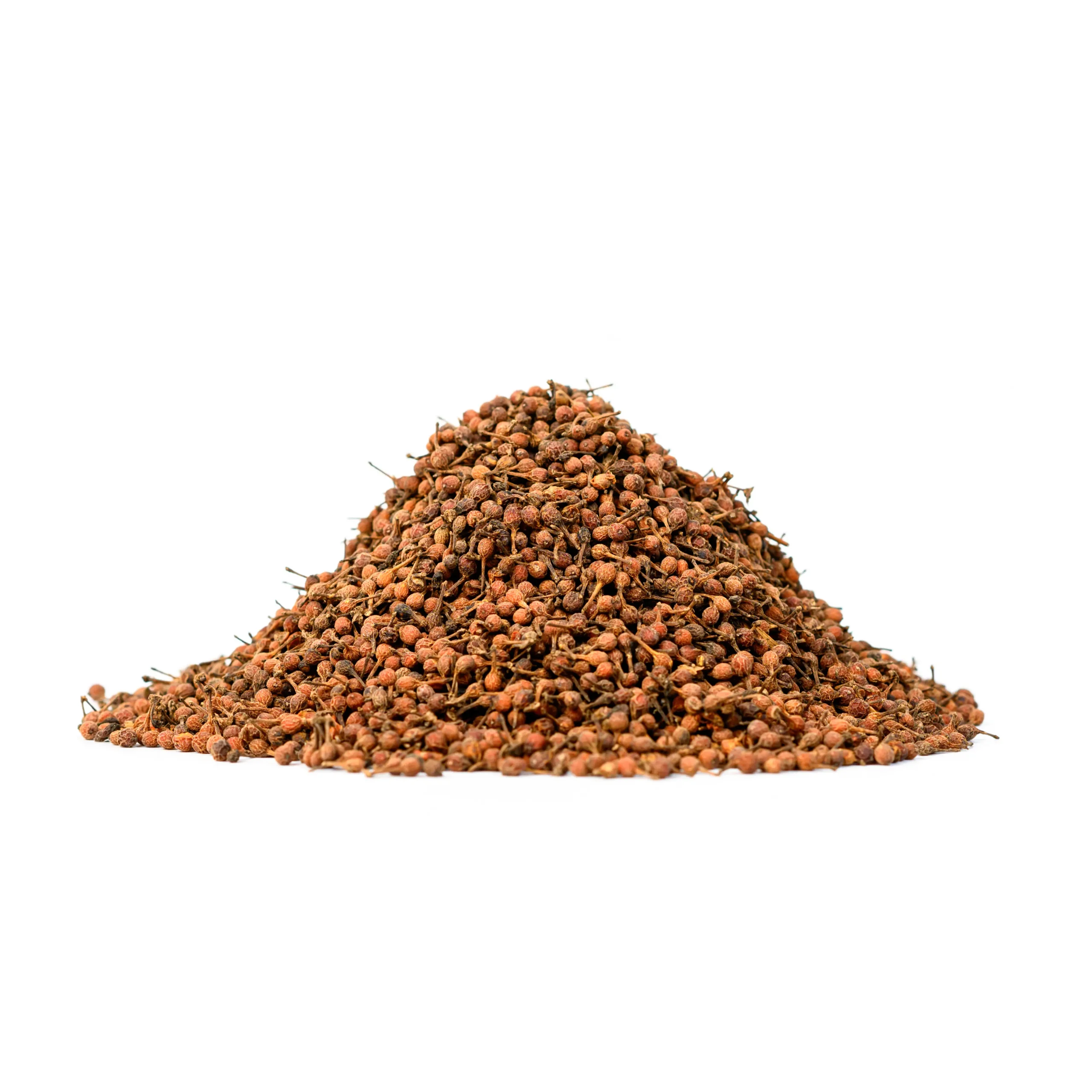
    Voatsiperifery pepper (Piper borbonense) is one of the rarest and most sought-after spices in the world. Unlike classic peppers that grow on vines cultivated in neat rows, Voatsiperifery is a wild pepper that grows naturally in Madagascar’s humid tropical forests, mainly in the Fianarantsoa region and eastern Madagascar.

    Its name, of Malagasy origin, literally means « fruit with its tail » — a reference to the small tail that stays attached to each berry after harvest. That distinctive morphological detail makes it identifiable at a glance.

    A spice harvested in tropical forest

    Harvesting Voatsiperifery is an adventure in itself. The wild vines can climb up to 20 metres into the canopy. Harvesters, often men from surrounding villages, climb tree trunks bare-handed or with rudimentary tools to reach the clusters of berries high above.

    This difficulty of access, combined with the species’ rarity and a short harvest season (2 to 3 months a year), explains why Voatsiperifery ranks among the most expensive peppers in the world, alongside Kampot pepper or Java long pepper.

    At My Spices Land, our Red Voatsiperifery Pepper from Madagascar is hand-harvested in natural forest, sun-dried and sorted berry by berry.

    A unique aromatic profile

    What makes Voatsiperifery unforgettable is an aromatic profile with no equivalent in the spice world:

    • Top notes: fresh citrus (yuzu, lime), wild berries, ginger
    • Heart notes: damp forest, green foliage, faint menthol
    • Base notes: mild chilli, sandalwood, a lingering gentle heat

    Its heat on the palate is present but never scorching: a soft, long-lingering bite, very different from ordinary black pepper. Top chefs love it precisely for this ability to lift a dish without overwhelming it.

    How to use Voatsiperifery pepper in cooking

    Its aromatic complexity calls for a thoughtful touch:

    Meat and fish

    Coarsely grind Voatsiperifery at the moment of serving over duck breast, a rib of beef or scallop carpaccio. The heat of the dish first releases the citrus notes, then the woody notes settle in.

    Cheese

    It’s a sublime pairing with soft cheeses (brie, camembert) or fresh goat’s cheese. A few turns of the mill are enough.

    Desserts and chocolate

    Voatsiperifery elevates 70% dark chocolate. Try it in a ganache, a fondant or a chocolate mousse. It also pairs beautifully with Madagascar vanilla for original creations.

    Marinades and vinaigrettes

    Coarsely crushed and steeped in olive oil, it makes an extraordinary vinaigrette for warm salads or roasted vegetables.

    Voatsiperifery vs black pepper: what’s the difference?

    Black pepper (Piper nigrum) and Voatsiperifery (Piper borbonense) belong to the same botanical family but are two very different species:

    • Appearance: Voatsiperifery has smaller, irregular berries with a distinctive tail. Black pepper is a round, regular berry.
    • Aroma: black pepper is direct and sharp. Voatsiperifery is complex, fruity and forest-like.
    • Use: black pepper can season any dish. Voatsiperifery is reserved for preparations where it takes centre stage.
    • Price: 10 to 20 times more expensive than mass-market black pepper, justified by its rarity and harvest method.

    Storing Voatsiperifery pepper

    Like all precious spices, Voatsiperifery calls for a few precautions:

    • Keep whole peppercorns in an airtight jar, away from light and moisture.
    • Don’t store it near a heat source (hob, sunny window).
    • Grind on demand, never in advance: once ground, the pepper loses its aroma within hours.
    • Optimal shelf life: 24 months as whole, unground peppercorns.

    FAQ — Voatsiperifery pepper

    Is Voatsiperifery pepper very hot?

    No, it’s moderately hot. Its heat is gentle and gradual, well below cayenne pepper or a strong black pepper. It’s the aromatic complexity, more than the strength, that sets it apart.

    Can Voatsiperifery be used in a standard pepper mill?

    Yes, but you’ll need a mill with a sturdy mechanism able to handle slightly irregular berries. Avoid cheap mills with plastic mechanisms. A ceramic or stainless-steel mill works perfectly.

    Where can you buy authentic Voatsiperifery pepper?

    Most « Voatsiperifery » sold in supermarkets is actually a blend or a substitute. To guarantee authenticity and freshness, buy directly from a specialist importer. Discover our Red Voatsiperifery Pepper from Madagascar, hand-harvested and directly imported.

  • How to Choose Vanilla Pods: The Complete Guide

    How to Choose Vanilla Pods: The Complete Guide

    What makes a quality vanilla pod

    Not all vanilla pods are created equal. Between a dried-out pod bought at the supermarket and a Grade Premium pod freshly imported from Madagascar, the difference is night and day. Here’s how to choose your vanilla pods while avoiding common pitfalls.

    Visual appearance

    A good vanilla pod should be:

    • Supple and soft — it bends without breaking or cracking. A dry, brittle pod has lost most of its aroma.
    • Glossy or lightly frosted — the white frosting (vanillin crystals) on the skin is a sign of excellent quality. It isn’t mould: it’s an indicator of high aromatic concentration.
    • Plump and well-filled — a quality pod is thick, not flattened. The seeds (vanilla caviar) should be visible and plentiful beneath the skin.
    • Dark brown, almost black — a uniform, deep colour indicates good curing. A pod that’s too pale was harvested too early or dried too quickly.

    Length and grade

    A pod’s length is directly linked to its richness in seeds and aroma:

    • 10-12 cm: short pods, perfect for infused preparations (milk, cream, homemade vanilla sugar). Our Grade A 10-12 cm vanilla offers excellent value for everyday use.
    • 13-15 cm: the ultimate all-purpose format. Ideal for scraping and infusing. Our Grade A 13-15 cm vanilla is our best-selling reference.
    • 16-17 cm: longer pods with more caviar. Recommended for fine pastry.
    • 18-20 cm and 20 cm+: Grade Premium, reserved for professionals and demanding home cooks. Our Premium 20 cm+ vanilla is the pinnacle of Malagasy vanilla.

    Grade A vs Grade Premium: what’s the real difference?

    The term « Grade » refers to the pod’s quality standard, defined by moisture, length and appearance:

    • Grade A (Gourmet): moisture ≥ 25%, glossy, supple pod. This is the quality professional pastry chefs use to scrape seeds. Vanillin content is high (≥ 1.6%).
    • Grade Premium: the crème de la crème. Moisture ≥ 30%, extra-long, very plump pods, harvested at full maturity. For preparations where vanilla is the absolute star.
    • Grade B (extraction): drier pods, used to make extracts and powder. We offer this type as vanilla powder and vanilla seeds.

    How much should you buy?

    The answer depends on your use:

    • Occasional use (1-2 times a week): 10 to 20 pods are enough for 3-6 months. Go for a bag of 5 or 10 pods.
    • Keen amateur baker: 40 pods make for a comfortable reserve for a full baking season.
    • Professional or restaurateur: the 250 g and 500 g formats are the most economical. They also make it easy to prepare your own vanilla sugar or homemade extract.

    Note: vanilla keeps best in reasonable quantities. It’s better to restock regularly than to buy a huge quantity and watch the pods dry out.

    Choosing by variety

    Beyond grade, the botanical variety strongly influences the aromatic profile:

    • Vanilla planifolia (Bourbon): the universal reference. Warm, creamy, faintly smoky. Versatile in baking and confectionery.
    • Vanilla tahitensis (Tahitian type): floral, aniseed, fruity. Best used in small amounts in delicate preparations. Our Tahitian Premium 18 cm+ is highly prized in fine dining.
    • Vanilla pompona (black pompona): spicy, candied fruit, powerful. Ideal for exotic recipes and original creations. Discover our Pompona Grade A 16-19 cm.

    Mistakes to avoid

    • Buying the cheapest option — a €0.50 pod is inevitably dry, withered or picked too young. Real vanilla has a cost: 12 months of production time, manual labour and scarcity.
    • Confusing extract with whole pod — so-called « natural » vanilla extracts can contain a lot of alcohol and little substance. The whole pod remains the best choice for home baking.
    • Neglecting storage — even a beautiful pod quickly loses its aroma if exposed to dry air or light. See our storage guide.

    FAQ — Choosing vanilla pods

    Can the same vanilla pod be used twice?

    Yes. After scraping out the seeds, dry the empty pod and place it in a jar of sugar to get delicious vanilla sugar. The empty pod can also be reused to infuse milk or cream.

    Which pod should you choose to make homemade vanilla extract?

    For vanilla extract, go for Grade A pods in a 250 g or 500 g format. Vanilla powder is also an excellent base for extraction.

    How much does a good Madagascar vanilla pod cost?

    A quality Grade A pod sells for between €3 and €8 apiece depending on length and grade. Bulk formats (10, 20, 40 pods) always offer better value. Be wary of prices that seem too low: they always hide mediocre quality.

  • Madagascar Vanilla: Everything You Need to Know

    Madagascar Vanilla: Everything You Need to Know

    Why is Madagascar vanilla the most prized in the world?

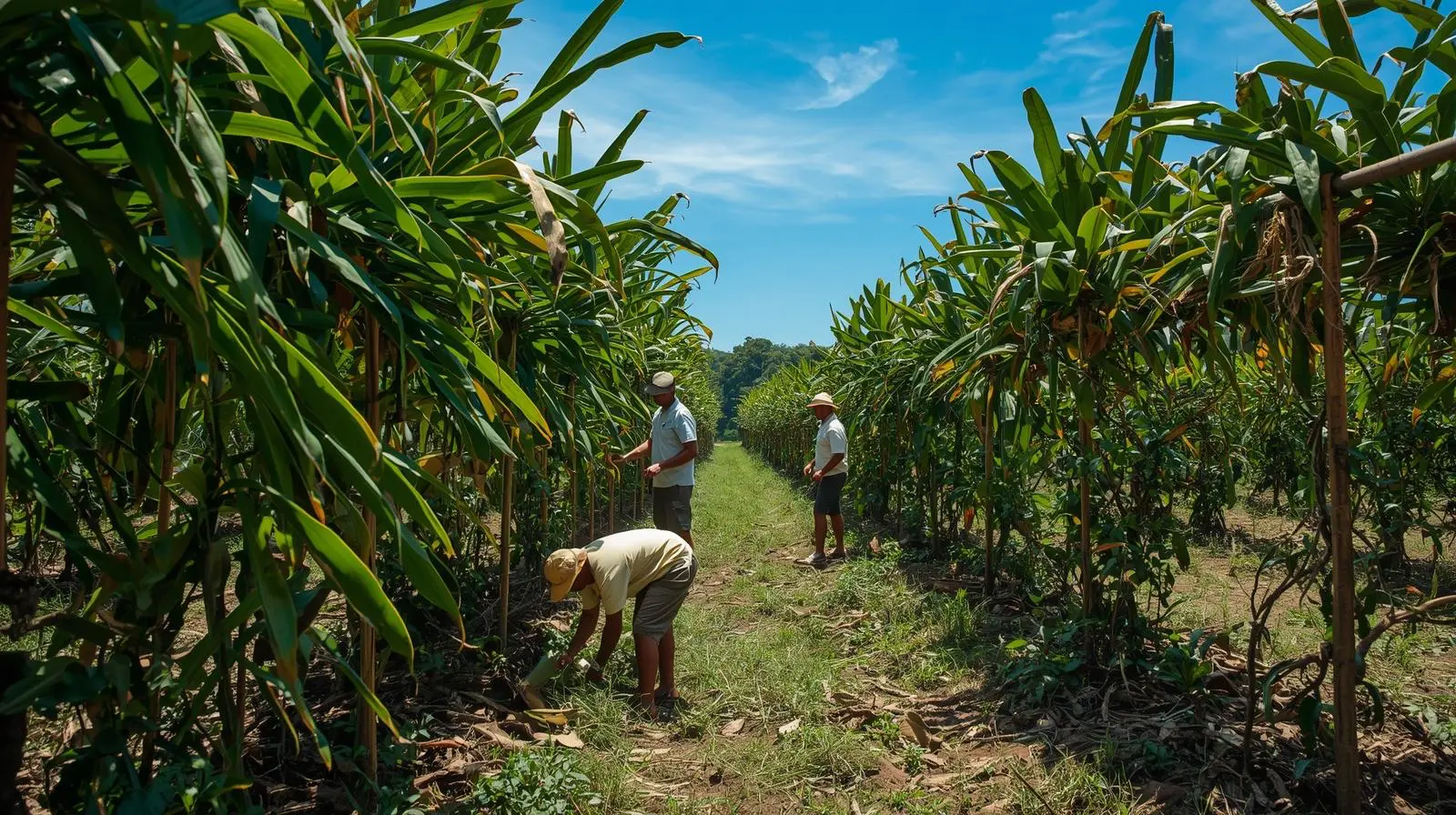
    Madagascar vanilla now accounts for over 80% of the world’s natural vanilla production. This dominance is no accident: it’s the result of an ideal tropical climate, artisanal know-how passed down through generations, and a botanical species of incomparable aromatic richness, Vanilla planifolia.

    Nicknamed the « queen of spices », Madagascar Bourbon vanilla stands out for its natural vanillin content, its softness, its dark brown colour and its warm notes of cream, butter and blond tobacco. It’s this aromatic complexity that makes it the flagship ingredient of professional and artisanal baking worldwide.

    The history of vanilla in Madagascar

    Vanilla originates from Mexico, where the Aztecs used it to flavour xocoatl, their cacao drink. The Spanish introduced it to Europe in the 16th century, but for a long time the plant would not reproduce outside its natural habitat, lacking its natural pollinator, a bee endemic to Mexico.

    Everything changed in 1841, when Edmond Albius, a 12-year-old enslaved boy from Réunion, discovered the technique of hand-pollinating the vanilla flower. This discovery revolutionised vanilla growing worldwide and enabled its development across the islands of the Indian Ocean. Madagascar quickly adopted the crop, and the SAVA region — for Sambava, Antalaha, Vohemar and Andapa — became the cradle of Malagasy Bourbon vanilla.

    Today, thousands of Malagasy farming families depend on vanilla growing, carrying on an agricultural heritage unique in the world.

    Vanilla varieties grown in Madagascar

    Vanilla planifolia: classic Bourbon vanilla

    This is the variety most widely grown in Madagascar. Its long, plump, glossy pods offer an exceptional vanillin content (up to 2.5%). It forms the basis of the vast majority of our Grade A and Grade Premium vanilla pods.

    Vanilla tahitensis: Tahitian-type vanilla

    Rarer, Tahitian-type vanilla is grown in small quantities in Madagascar. Its shorter, wider pods develop floral notes of heliotrope and aniseed, very different from planifolia. It’s especially prized in fine dining for its original aromatic profile. Discover our Tahitian-type Grade Premium 18 cm+.

    Vanilla pompona: black pompona vanilla

    Pompona vanilla, sometimes called « fat vanilla », produces short, stocky pods, very rich in aromatic matter. Its flavour profile stands out with notes of candied fruit and tobacco. Our Pompona Grade A 16-19 cm is ideal for long-infusion preparations.

    How is Madagascar vanilla produced?

    Malagasy vanilla production is entirely manual, from pollination to final curing:

    1. Hand pollination — Each flower is pollinated by hand on the very day it opens (it only stays open for a few hours). This is meticulous, demanding daily work.
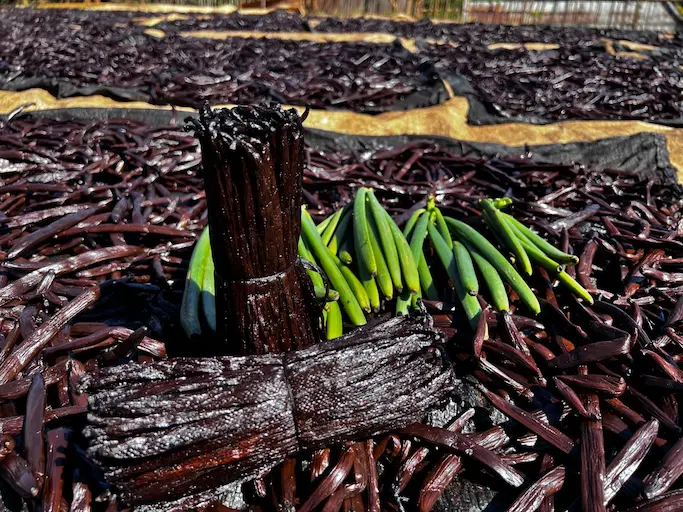
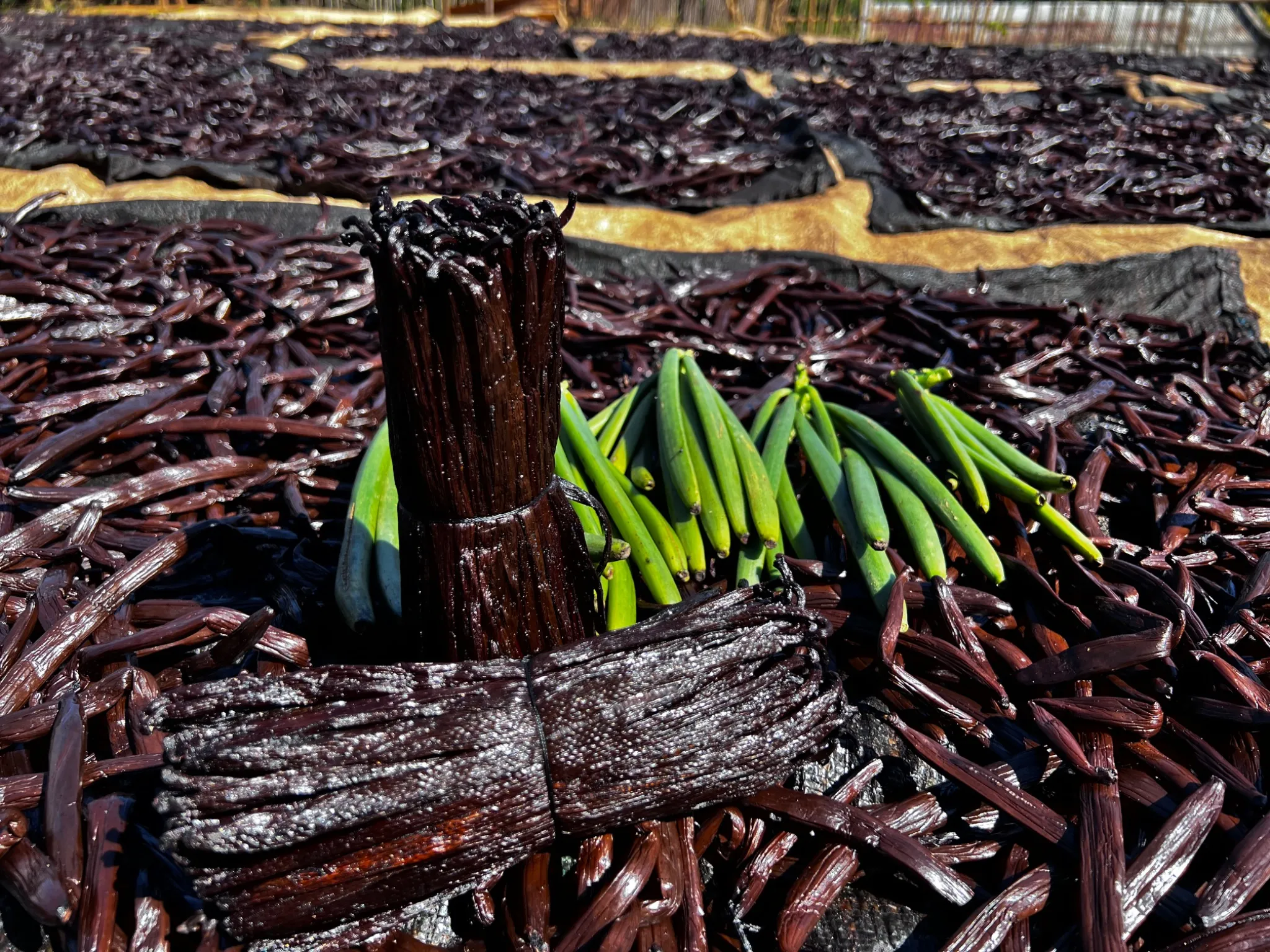
    2. Harvesting the green pods — After 9 months of growth, the pods are harvested while still green, with no apparent scent.
    3. Blanching — The pods are dipped for 3 minutes in water at 65°C to stop vegetative growth and trigger the enzymatic reactions that produce vanillin.
    4. Sweating — Wrapped in wool blankets, the pods ferment for 48 hours in airtight crates.
    5. Slow drying — Laid out in the sun by day and brought in at night, the pods dry for 2 to 6 months until reaching their characteristic dark brown colour.
    6. Curing — The pods are stored in trunks for several months to develop their final aromatic bouquet.

    This artisanal process, spanning 10 to 12 months, explains the price of quality natural vanilla — and fully justifies its status as a luxury product.

    Madagascar vanilla grades

    At My Spices Land, we offer several grades to suit every use:

    • Grade A (Gourmet): soft, glossy pods with high moisture content (25-30%). Ideal for scraping seeds in baking. Available in 13-15 cm, 10-12 cm, and in a lower grade for large-scale preparations.
    • Grade Premium: the pinnacle of quality. Long pods of 18-20 cm and 20 cm and above, ultra-plump, reserved for pastry chefs and fine food shops.
    • Derived products: pure vanilla seeds, Grade A vanilla powder and vanilla caviar for professionals.

    FAQ — Madagascar vanilla

    What’s the difference between Madagascar vanilla and synthetic vanilla?

    Synthetic vanillin is produced from petroleum derivatives or wood cellulose. It reproduces a single aromatic compound, where natural vanilla contains over 250. The taste is fundamentally different: flat and one-dimensional for the synthetic version, complex and deep for the natural one.

    How many vanilla pods does a recipe need?

    As a rule of thumb: 1 pod per 500 ml of liquid (custard, ice cream, crème brûlée) or per 500 g of batter (financier, cake). With Grade Premium, half a pod is often enough thanks to its aromatic richness.

    Does Madagascar vanilla keep for a long time?

    Yes. Under good conditions (airtight tube, away from light, between 15°C and 20°C), Grade A pods keep their aroma for 18 to 24 months. See our vanilla storage guide.

    Buy real Madagascar vanilla

    At My Spices Land, we work directly with Malagasy producers in the SAVA region, guaranteeing full traceability and consistent quality. All our products are packed to order to ensure maximum freshness.

    Discover our full range of Madagascar vanilla →