Introduction
On a label, « vanilla flavour », « vanilla extract » or « vanillin » do not mean the same thing at all. Here’s how to decode what you’re actually buying.
What is vanillin?
Vanillin is the main aromatic molecule responsible for vanilla’s scent. In a natural pod, it is accompanied by several hundred other aromatic compounds that create the complexity of the fragrance. Synthetic vanillin, industrially produced from lignin or petrochemicals, reproduces only that single molecule, in a much flatter, one-dimensional way.
How to read a label
- « Vanilla pod » or « natural vanilla extract »: a product derived directly from the plant.
- « Natural vanilla flavouring »: aromatic molecules of natural origin, but not necessarily derived from vanilla itself.
- « Vanilla flavour » or « vanillin » with no further detail: very likely a synthetic molecule.
The difference on the palate
Natural vanilla offers layered aromatic richness: woody, fruity and floral notes on top of the vanilla core. Artificial vanillin, meanwhile, delivers a single sweet, vanilla-like note, often perceived as « louder » or more artificial on the finish.
Why the price difference?
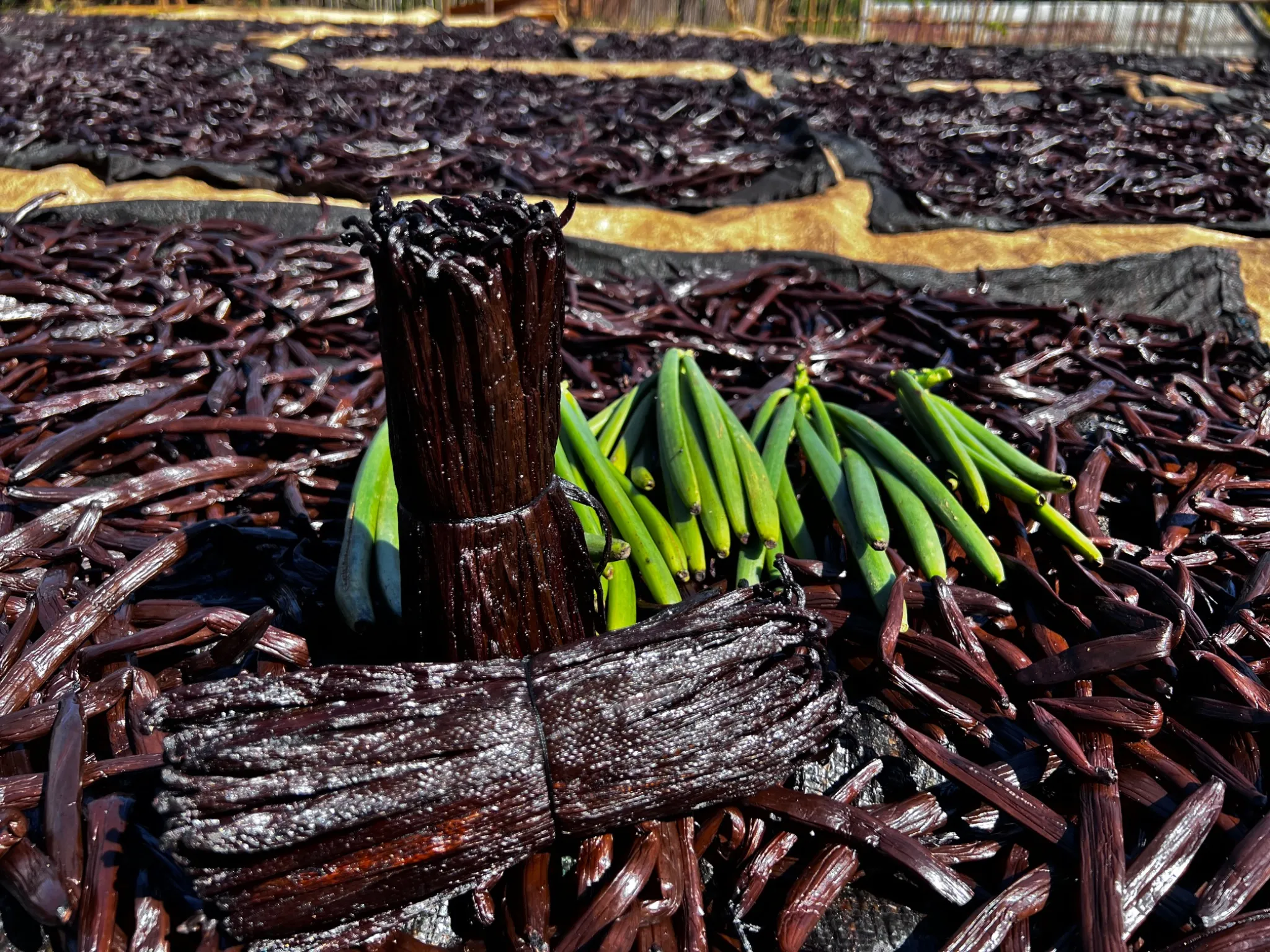
Growing vanilla is a long, labour-intensive process: hand pollination, harvesting, and curing spread over several months. This work explains the significant price gap with synthetic vanillin, produced in a matter of hours in a laboratory.
Conclusion
Choosing natural vanilla means choosing an inimitable aromatic complexity and supporting a demanding agricultural chain, from Malagasy terroir all the way to your plate.
Laisser un commentaire