Catégorie : English

  • Madagascar Black Pepper: Aromatic Power and Best Culinary Uses

    Madagascar Black Pepper: Aromatic Power and Best Culinary Uses

    Madagascar black pepper isn’t just about heat: it carries woody, faintly fruity notes that fine kitchens have sought out for decades. Grown mainly on the east coast, between tropical heat and steady rainfall, it’s one of the spices that turns a decent dish into a memorable one.

    A pepper shaped by the Malagasy climate

    The pepper vine (Piper nigrum) climbs natural stakes on often family-run plots, under the partial shade of tall trees. The berries are hand-picked as they start to turn red, then sun-dried on racks, which darkens the skin and concentrates the essential oils responsible for the aroma. This traditional drying, slower than industrial drying, is what gives Malagasy pepper its reputation: less aggressive than some Asian peppers, rounder, with a heat that builds gradually rather than hitting all at once.

    Whole peppercorns or ground: which to choose?

    Whole black peppercorns keep their aroma intact far longer: the essential oil that carries the scent evaporates as soon as the berry is cracked. A table mill and a few seconds before serving are enough to transform a simple dish. Ground black pepper, meanwhile, is built for cooking: marinades, simmered sauces, spiced bread doughs — anything that needs even diffusion without grinding at the last minute.

    How to use it in the kitchen

    • Red meat and game: a coarsely cracked pepper crust before searing over high heat.
    • Sauces and reductions: a few whole peppercorns infused then removed, for flavour without the bite of whole pieces.
    • Spiced baking: a touch of ground black pepper lifts gingerbread or a red-fruit compote.
    • Winning pairing: black pepper contains piperine, which multiplies the absorption of curcumin from turmeric — a duo that’s as culinary as it is wellness-minded.

    How to store it

    Kept away from light and moisture in an airtight container, whole peppercorns will last several years without losing intensity. Ground, on the other hand, it loses much of its aroma within a few months: better to grind small amounts regularly than to buy a large jar of powder.

    A spice at the heart of trade history

    Pepper was once so precious it was nicknamed the « black gold » of trade routes, traded by weight against silver in medieval Europe. Madagascar entered this story later, but established itself thanks to a climate particularly favourable to the pepper vine and a drying know-how that has remained artisanal where other producing regions have largely industrialised the process. That unhurried pace is exactly what gives Malagasy pepper the rounded aroma chefs look for.

    Recognising quality pepper

    A good black peppercorn should feel firm between the fingers, with no hollow or powdery spots, and release a clean scent as soon as it’s lightly crushed. Pepper that feels too light or dull often signals poor drying or overly long storage before packaging — simple criteria to check even without particular expertise.

    Find our full range of Madagascar peppers and spices in our Spices collection, sourced directly from partner producers on the east coast.
  • White, Black, Green, Wild Pepper: The Comparative Guide to Madagascar Peppers

    White, Black, Green, Wild Pepper: The Comparative Guide to Madagascar Peppers

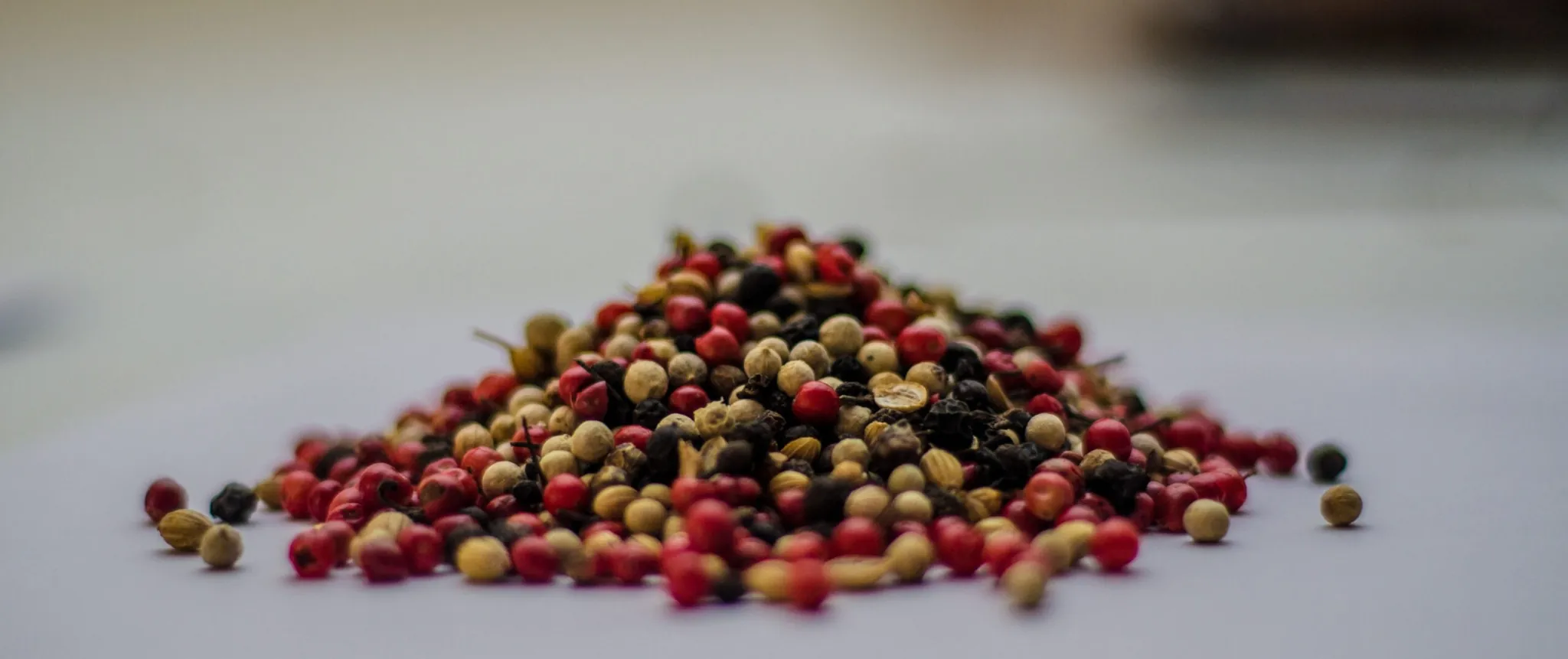
    White, black, green or wild voatsiperifery pepper: the difference between Madagascar peppers is almost never about different varieties, but about the same fruit harvested and processed at different stages. Understanding this detail completely changes how you choose them in the kitchen.

    One fruit, four faces

    Black, white and green pepper all come from the same berry of Piper nigrum: only the ripeness at harvest and the processing method change.

    • Green pepper: harvested unripe, then quickly dried or preserved to keep its fresh, citrusy vegetal edge.
    • Black pepper: harvested at half-ripeness (berry starting to turn red), sun-dried with its skin on, which darkens and concentrates the aroma.
    • White pepper: harvested fully ripe, then stripped of its skin by soaking — hence its finer, earthier flavour, without the sharpness carried by the husk.

    Voatsiperifery pepper, on the other hand, is a different story altogether: it is a genuinely wild vine (Piper borbonense) that grows spontaneously in Madagascar’s forests and is hand-picked berry by berry, with no organised cultivation. Its aromatic profile — citrus, resin, a hint of menthol — has no cultivated equivalent.

    Which pepper for which dish?

    Pepper Profile Best for
    Green Fresh, sharp, vegetal Green pepper sauces, fish, shellfish
    Black Woody, round, building heat Red meat, marinades, spiced pastry
    White Earthy, visually discreet White sauces, purées, pale dishes where black would show
    Wild (voatsiperifery) Citrus, resinous, complex Fine dining, finishing touch on a plated dish

    What about pink peppercorns?

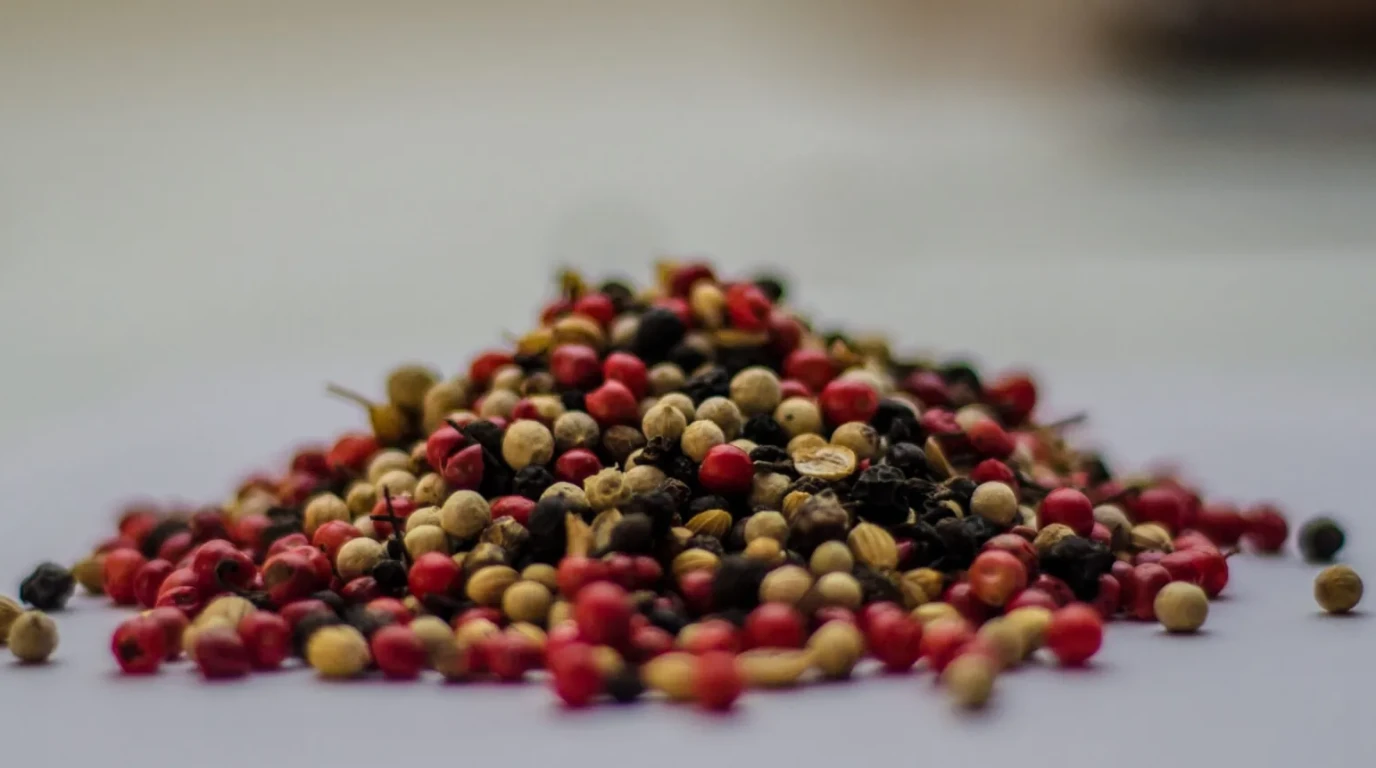
    Often sold alongside pepper, pink peppercorns don’t actually belong to the pepper family: they are the fruit of a different tree (Schinus), with a fruity, slightly sweet flavour. Think of them as a companion to pepper rather than a substitute — we cover them in a dedicated article.

    Storing them properly

    All of them keep better whole than ground, away from light. Green pepper, more fragile, is best kept in its soaking brine or dehydrated; black and white peppercorns will hold for several years in an airtight jar.

    Frequently asked questions

    Is white pepper milder than black pepper?

    Less sharp on the palate, but not less fragrant: it has an earthier, more discreet flavour, without the husk that carries part of black pepper’s bite.

    Can black pepper be replaced with green pepper in a recipe?

    Yes for freshness, no for intensity: green pepper is milder and more vegetal, so you’ll need more of it for a comparable result.

    Is voatsiperifery pepper organic by nature?

    It grows wild with no cultivation or inputs whatsoever, making it a foraged spice rather than a certified crop — in practice, about as close to natural as it gets.

    Discover the full range in our Madagascar Spices collection.

  • An Ethical Supply Chain: Our Responsible Sourcing in Madagascar

    An Ethical Supply Chain: Our Responsible Sourcing in Madagascar

    Introduction

    Behind every vanilla pod or spice lies a production chain that’s often invisible to the end consumer. At My Spices Land, transparency about that chain is an integral part of our commitment.

    Direct import from Madagascar

    By importing directly, without multiple intermediaries, we guarantee better pay for local producers and complete traceability, from the plot to the shipment.

    Quality control at every stage

    Every incoming batch undergoes rigorous checks: moisture content, pod integrity, absence of contaminants, and compliance with current European standards (pesticide MRLs, microbiology, labelling).

    Packaging designed to preserve quality

    Our airtight packaging is designed to protect aromas during transport and storage, so that the quality found at harvest reaches your kitchen intact.

    A long-term relationship with producers

    Beyond the simple commercial transaction, an ethical supply chain means a stable, lasting relationship with local producers and cooperatives — a necessary condition for sustainable agriculture and for preserving traditional Malagasy know-how.

    Why it matters to you

    Choosing traceable vanilla or spices means the guarantee of an authentic product, of consistent quality, purchased under conditions that respect the people who produce it.

    Conclusion

    The quality of a spice isn’t just about taste: it also tells the story of its supply chain. My Spices Land is committed to making sure that story is one to be proud of, from the Malagasy producer all the way to your table.

  • Natural Vanilla vs Artificial Vanillin: Separating Fact from Fiction

    Natural Vanilla vs Artificial Vanillin: Separating Fact from Fiction

    Introduction

    On a label, « vanilla flavour », « vanilla extract » or « vanillin » do not mean the same thing at all. Here’s how to decode what you’re actually buying.

    What is vanillin?

    Vanillin is the main aromatic molecule responsible for vanilla’s scent. In a natural pod, it is accompanied by several hundred other aromatic compounds that create the complexity of the fragrance. Synthetic vanillin, industrially produced from lignin or petrochemicals, reproduces only that single molecule, in a much flatter, one-dimensional way.

    How to read a label

    • « Vanilla pod » or « natural vanilla extract »: a product derived directly from the plant.
    • « Natural vanilla flavouring »: aromatic molecules of natural origin, but not necessarily derived from vanilla itself.
    • « Vanilla flavour » or « vanillin » with no further detail: very likely a synthetic molecule.

    The difference on the palate

    Natural vanilla offers layered aromatic richness: woody, fruity and floral notes on top of the vanilla core. Artificial vanillin, meanwhile, delivers a single sweet, vanilla-like note, often perceived as « louder » or more artificial on the finish.

    Why the price difference?

    Growing vanilla is a long, labour-intensive process: hand pollination, harvesting, and curing spread over several months. This work explains the significant price gap with synthetic vanillin, produced in a matter of hours in a laboratory.

    Conclusion

    Choosing natural vanilla means choosing an inimitable aromatic complexity and supporting a demanding agricultural chain, from Malagasy terroir all the way to your plate.

  • Red Vanilla vs Black Vanilla: What’s the Difference?

    Red Vanilla vs Black Vanilla: What’s the Difference?

    Introduction

    The colour of a vanilla pod often puzzles the curious: why are some pods black and others a lighter brown, sometimes called « red »? The answer lies both in the variety and in the curing process.

    Black vanilla: the market standard

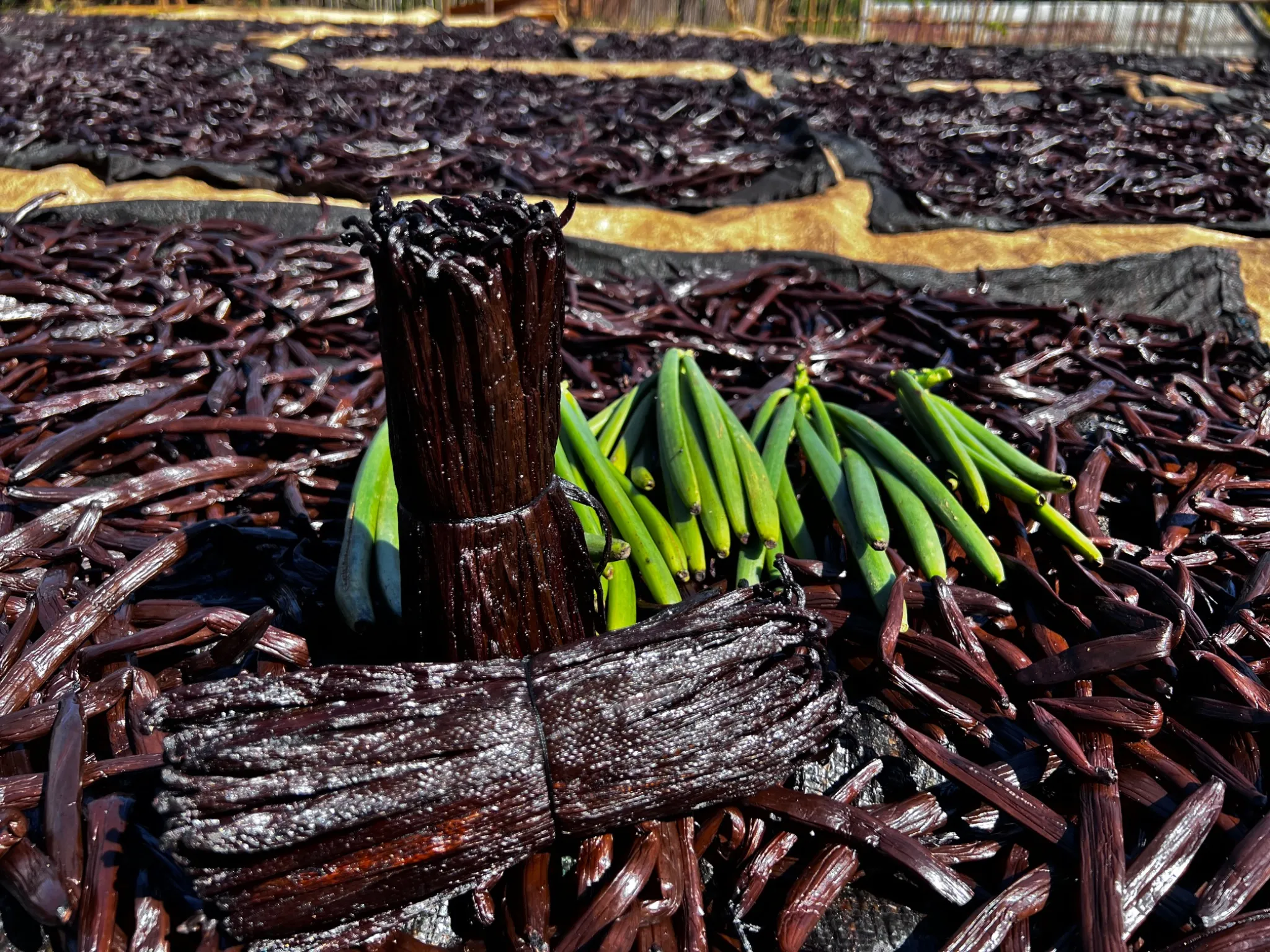
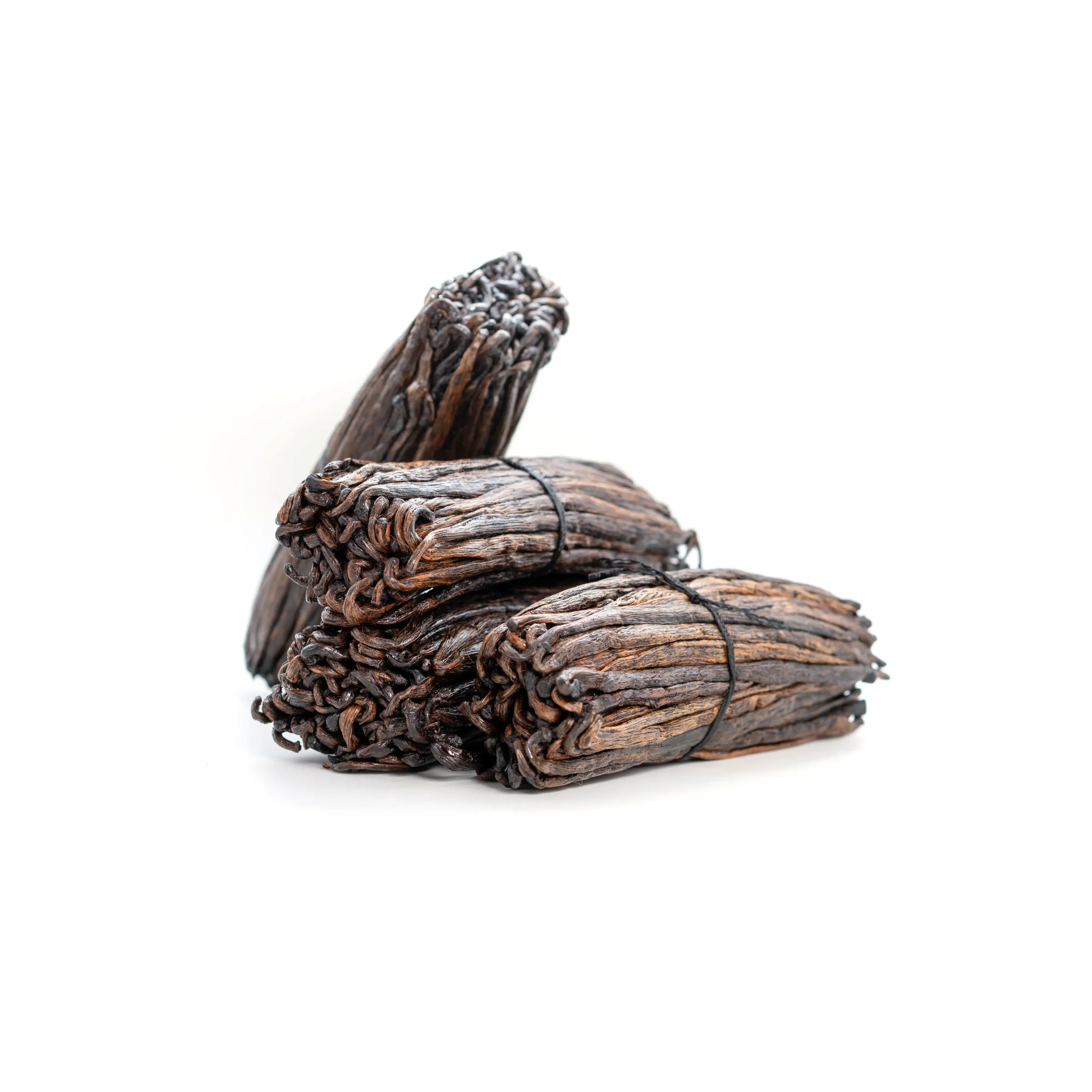
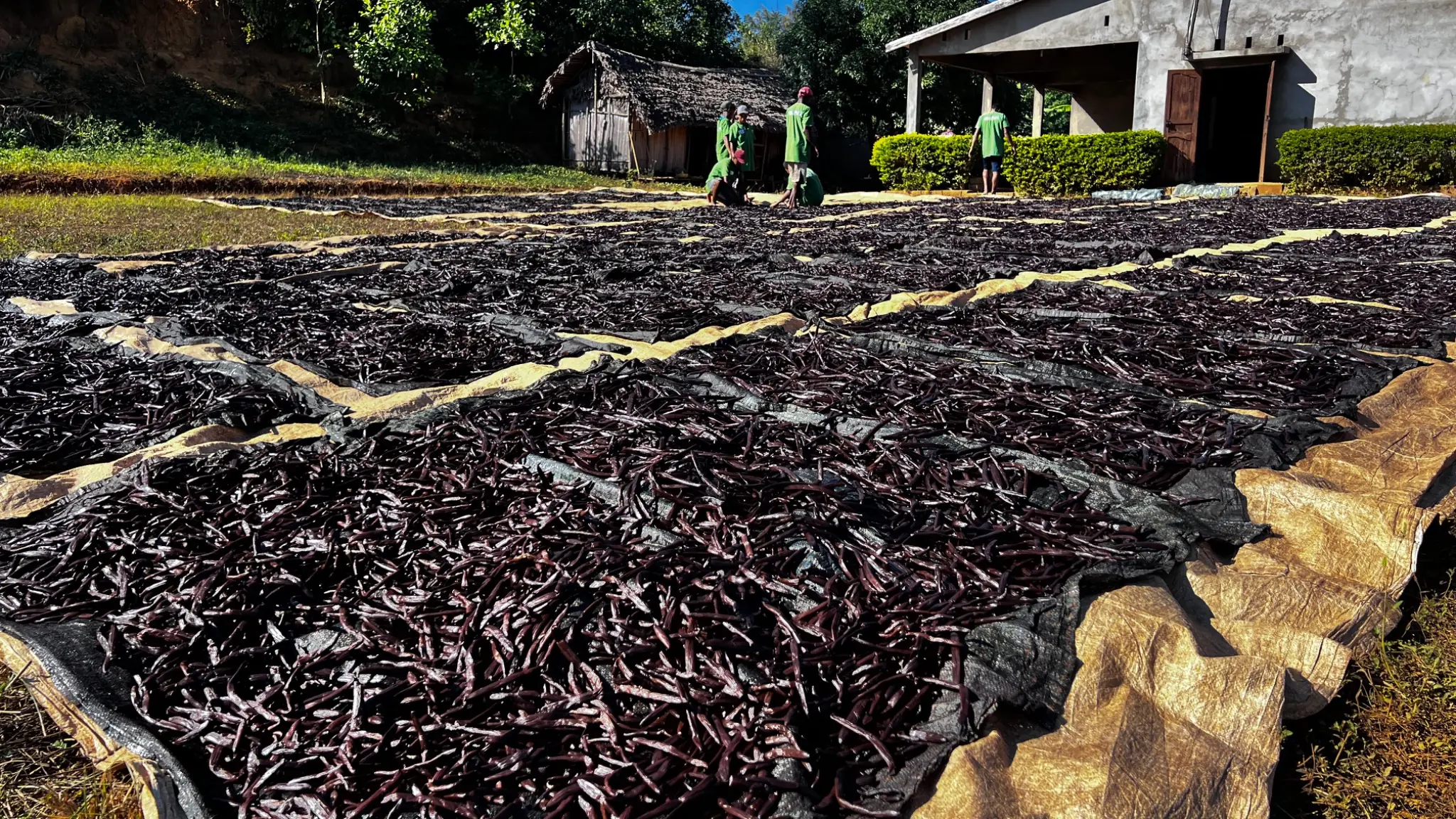
    Black vanilla, the most common, gets its dark, glossy colour from a traditional curing process involving blanching, sweating and slow drying. This process fully develops the cocoa and caramel notes that characterise classic Bourbon vanilla.

    Red vanilla: a particular hue

    So-called « red » vanilla, browner and more coppery, generally comes from a slightly different curing process or a distinct botanical variety depending on origin. Its aromatic profile can turn out fruitier, with notes slightly different from classic black vanilla, while remaining rich in vanillin.

    A matter of taste as much as colour

    Beyond appearance, the choice between red and black vanilla comes down mainly to aromatic preference and intended use. Both offer comparable natural vanillin content when of Grade A quality.

    How to use them

    Both varieties are used the same way: split and scraped to flavour creams and pastries, infused whole in a hot liquid, or turned into homemade extract.

    Conclusion

    More than a quality hierarchy, the difference between red and black vanilla is above all an aromatic and visual nuance. Both are worth trying and comparing according to your own preferences.

  • Spice and Food Pairings: What to Match with Vanilla and Malagasy Spices

    Spice and Food Pairings: What to Match with Vanilla and Malagasy Spices

    Introduction

    Choosing the right spice is one thing; knowing how to pair it is another. Here are a few proven pairings to get the best out of Malagasy spices, in both sweet and savoury cooking.

    Vanilla and fruit

    Vanilla pairs naturally with stone fruit (peach, apricot), citrus and exotic fruit like mango or pineapple. A split pod in a poaching syrup instantly transforms a simple fruit salad.

    Vanilla and chocolate

    The classic pairing of Bourbon vanilla and dark chocolate never fails: vanilla softens the cocoa’s bitterness and brings out its fruity notes.

    Cloves and slow-cooked meat

    Cloves pair perfectly with long-cooked meats: pot-au-feu, daube, marinades for game. Two or three cloves are enough to season an entire dish without overpowering the other flavours.

    Voatsiperifery pepper and fine fish

    This wild pepper, with its woody, faintly citrusy notes, pairs beautifully with fine fish (sea bass, John Dory) and aged cheeses, adding a touch of character without aggressiveness.

    Spices and drinks

    Vanilla and cloves infused in mulled wine, Voatsiperifery pepper as a finishing touch on a spiced rum cocktail: spices also find their place in hot or spirited drinks.

    Conclusion

    The best pairings are often born from experimentation. Thanks to their aromatic richness, Madagascar’s spices offer a wonderful culinary playground.

  • B2B Buying Guide: Purchasing Spices in Bulk for Professionals

    B2B Buying Guide: Purchasing Spices in Bulk for Professionals

    Introduction

    For a restaurateur, a pastry chef or a reseller, buying spices in bulk involves different considerations than buying for personal use: reliable supply, cost control, and consistent quality from one order to the next.

    Defining your real needs

    Before requesting any quote, it’s essential to estimate your monthly consumption and identify the right formats: whole pods, powder, cuts, in 250 g, 500 g or 1 kg bags depending on the volumes handled.

    Quality criteria to check

    • Traceability of origin (country, cooperative, harvest)
    • Available technical data sheet (moisture, vanillin content, microbiological criteria)
    • Compliance with European standards (pesticide MRLs, contaminants, labelling)
    • Consistent quality from one order to the next

    The advantages of direct import

    Working with a direct importer, without a middleman, generally means better prices for equal quality, stronger traceability, and a single point of contact for any technical or logistics question.

    Volumes and tiered pricing

    Most professional suppliers offer tiered pricing beyond certain order thresholds. Don’t hesitate to discuss your expected annual volumes to secure the best terms.

    Conclusion

    A solid B2B partnership is built on trust, traceability and consistency. My Spices Land supports professionals with a dedicated space and packaging formats suited to the needs of restaurants, pastry businesses and resellers.

  • Moringa Oil: Benefits and Uses

    Moringa Oil: Benefits and Uses

    Introduction

    Long reserved for those in the know, moringa oil is now gaining popularity thanks to its exceptional nutritional richness. Extracted from the seeds of Moringa oleifera, nicknamed the « miracle tree », it is produced in Madagascar under ideal growing conditions.

    An oil rich in active compounds

    Moringa oil is naturally rich in oleic acid, vitamin E and antioxidants. This composition makes it a particularly stable oil, slow to turn rancid, and highly nourishing for both skin and hair.

    Benefits for the skin

    It is recognised for its moisturising and regenerating properties. Used as a night treatment or a makeup-removing oil, it helps nourish dry skin and soothe minor irritations.

    Benefits for hair

    Used as a pre-shampoo mask or as a serum on dry ends, moringa oil helps limit breakage and restore shine to dull hair.

    Culinary use

    Less well known, moringa oil can also be used as a cold seasoning, drizzled over salads or steamed vegetables, to enjoy its mild, slightly herbaceous taste.

    How to choose a quality oil

    Look for a virgin, cold-pressed, unrefined oil, ideally from a traceable supply chain that guarantees the origin of the seeds and the extraction conditions.

    Conclusion

    Versatile and naturally rich, moringa oil deserves a place in the bathroom just as much as in the kitchen.

  • Madagascar Cloves: Benefits and Culinary Uses

    Madagascar Cloves: Benefits and Culinary Uses

    Introduction

    After vanilla, cloves are one of Madagascar’s flagship spices, whose volcanic soil and tropical climate offer ideal growing conditions for their cultivation.

    A powerful aromatic profile

    Malagasy cloves stand out for their aromatic intensity: woody, warm, faintly sharp notes, carried by a high eugenol content — the compound responsible for their signature scent.

    Recognised benefits

    Cloves are traditionally used for their antiseptic and pain-relieving properties, notably applied locally to ease toothache. They are also rich in antioxidants and used as a post-meal digestive in many cultures.

    Culinary uses

    • In savoury cooking: pot-au-feu, marinades, curries, fragrant rice.
    • In baking: gingerbread, fruit compotes, mulled wine.
    • As an infusion: paired with cinnamon and ginger for a digestive tisane.

    How to store them well

    Keep cloves whole rather than ground: they hold their aroma far longer. An airtight container, away from light and moisture, allows storage for 2 to 3 years without notable loss of aromatic power.

    Conclusion

    Simple to use and remarkably versatile, Madagascar cloves deserve a place of honour in any kitchen that loves bold, authentic spices.

  • Vanilla Grades Explained: A, B, Gourmet — How to Make Sense of It

    Vanilla Grades Explained: A, B, Gourmet — How to Make Sense of It

    Introduction

    In the vanilla trade, the terms « Grade A », « Grade B » or « Gourmet » come up constantly, but their real meaning often stays vague for the uninitiated. Here’s what they actually mean.

    Grade A (Gourmet, Prime)

    This refers to plump, supple, glossy pods with optimal moisture content (roughly 30 to 35%) and a high vanillin level. These are the pods meant to be used whole, split and scraped: fine pastry, infusions, presentation. Their appearance matters just as much as their aroma.

    Grade B (extraction)

    Less plump, sometimes drier or slightly split, Grade B pods are no less aromatic: their vanillin content can even be comparable to Grade A. They are mainly intended for making extracts, where appearance matters little since the pod is infused then removed.

    The technical criteria that define a grade

    • Pod length
    • Moisture content
    • Vanillin content
    • Suppleness and physical integrity
    • Average weight per pod
    • Aroma intensity

    Which grade to choose for your use?

    For a use where the pod stays visible or whole (crème brûlée, infusion, decoration), go for Grade A. For a use exclusively focused on extraction (homemade extract, flavouring, spiced rum), Grade B offers excellent value for money.

    Conclusion

    The grade is not an absolute marker of aromatic quality, but an indicator of the pod’s intended use. Chosen well, it lets you optimise both the result in the kitchen and your budget.